
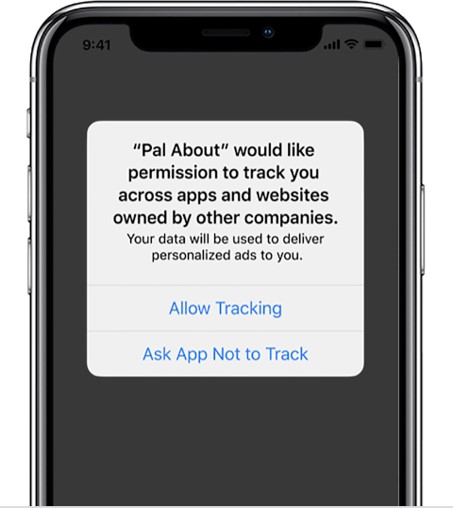
In September 2020, Apple announced the release of iOS 14 update. The highlight of this new version is the ATT (App Tracking Transparency). With this feature, developers must ask permission to track users for Ad targeting. See official announcement here
This development could have an adverse impact on advertisers ability to target consumers effectively. Thus, Ad campaigns on Mobile devices will be less effective.
Let’s Find out the consequences of this new iOS version on marketing campaigns.
Device ID
Mobile devices (Android and iOS) use unique and persistent identifiers called Device ID.
In Android environment, this Device ID is called AdID, while in Apple phones, it is called IDFA.
Advertisers use Device IDs for tracking purposes to collect and build personalized profiles of mobile users. By doing so, they are able to serve more relevant Ads.
iOS 14 update
Before iOS 14 update, all installed applications had, by default, access to the IDFA. Users were able to disable tracking for a given App but most of them would not change the default setting.
With iOS 14 update, Apps will ask for active consent to access and use the IDFA.
Expected impact
When given the choice, most mobile users will opt out of tracking.
Once iOS 14 will be largely deployed on Apple smartphones, the IDFA as a tracking ID for Advertising purposes will lose its relevance. This means that Advertisers will lose the ability to:
Identify and build audiences
Advertisers will not know mobile users behaviors on their mobile devices. As a result, it will be difficult to build groups of individuals who share the same characteristics.
Measure campaigns metrics
In-App events such as registration or check out will no longer be attributed to Marketing action. This will result in a loss of campaign optimization capability.